Rootworm-Protected Hybrid Corn
Genetically engineered hybrids on the horizon may reduce soil pesticide applications.
 |
|
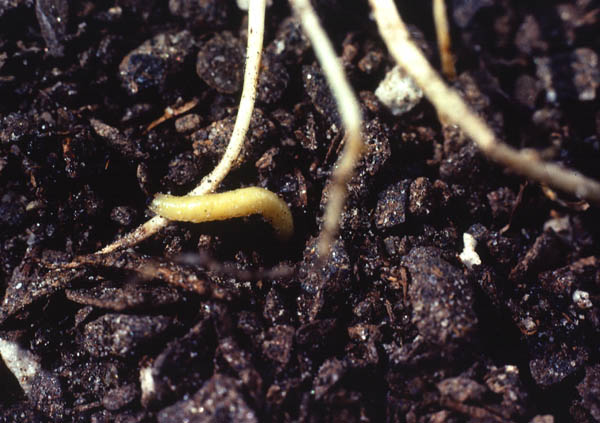
Corn rootworm feeding on young maize roots. |
Corn growers may soon have another option for controlling
rootworms: genetically engineered Bt corn targeted specifically to these
pests. Like Bt corn for control of the European corn borer, which has been
grown since the mid-1990s, the new hybrids incorporate genes from the soil
bacterium Bacillus thuringiensis that produce insecticidal
proteins. Rootworms are killed after munching on roots of engineered
plants, but before they cause significant damage.
Corn rootworms (a complex of four species in the genus
Diabrotica) are among the most serious pests of corn in the U.S. In
Colorado, the western corn rootworm is an important pest on medium to
heavy textured soils throughout the state, whereas the northern corn
rootworm occurs much less commonly. Root feeding by these insects weakens
root systems, thereby reducing yield and making plants more likely to fall
over. The national economic impact of corn rootworm is estimated at $1
billion annually, which includes yield losses and the cost of control
measures (Ostlie, 2001. Nature Biotechnology 19:624-625).
 |
|
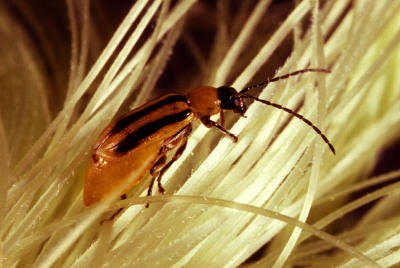
Adult stage of western corn rootworm searching for pollen on corn silk. |
Corn growers currently use three strategies for limiting
rootworm damage: crop rotation, application of soil insecticides at
planting, and spraying insecticides mid-season to control adult rootworm
beetles and thus reduce rootworm damage the following season. However,
each approach is problematic. In some growing areas, northern and western
rootworms have adapted to rotational practices, rendering that strategy
less effective. Large-scale use of soil insecticides, estimated to be
applied on 25% of the U.S. and the Colorado corn crop, has raised a number
of environmental and health concerns, including contamination of ground
and surface water, toxicity to birds and other non-target organisms, and
health effects on farm workers. Insecticidal sprays are limited by timing
and application difficulties, and by development of resistance to the
sprays.
Both Monsanto and Pioneer Hi-bred International have developed rootworm-resistant corn plants, which are currently undergoing the evaluation and regulatory process. The companies have used different genes in their products. Monsanto has inserted a gene for the Cry3B(b) toxin, chemically related to the protein incorporated into European corn borer-resistant hybrids. Pioneer’s version produces two novel proteins, both of which need to be present for optimal rootworm control. Although the proteins in Pioneer’s corn are from B. thuringiensis, they reportedly are not similar to previously identified Bt insecticidal proteins (Moellenbeck et al., 2001. Nature Biotechnology 19:668-672).
Although rootworm-resistant hybrids apparently offer pest management and environmental benefits, there are several concerns that must be addressed before they are approved for use. These include the following issues:
- What are appropriate resistance management strategies to prevent the adaptable rootworm from quickly developing resistance to the Bt hybrids? Because of differences in physiology and behavior, the high dose/refuge strategy used for management of resistance to European corn borer may not be effective for corn rootworm.
- What is the effect of these new plants on other elements of the ecosystem, especially non-target soil organisms?
- Will the grain produced by the new hybrids be accepted in export markets? Monsanto says it will not sell rootworm-resistant hybrids in the U.S. without regulatory approval in Japan. The company will also attempt to keep the grain from European markets through channeling effort.
 | |
|
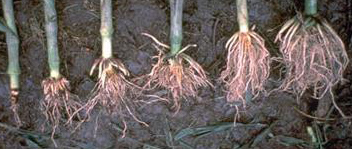
Damage from corn rootworm feeding from severe (left) to no damage (right). | |
|
Acceptance of genetically engineered crops varies; some gain popularity, some withdrawn.
|